As the College looks back to its founding in 1826, 200 years ago, we are proud to compile a collection of historic milestones in Environmental Stewardship and Sustainability at Lafayette. Students, faculty and staff cultivated grassroots initiatives that have continued to grow into a robust sustainability program. We hope you enjoy these historic tidbits as we forge into the future of sustainability at Lafayette.
If not otherwise listed, information and resources are from The Biography of a College Volumes I, II, and III. Additional information was pulled from https://sustainability.lafayette.edu/.
For a downloadable (condensed) version of the timeline visit this link.
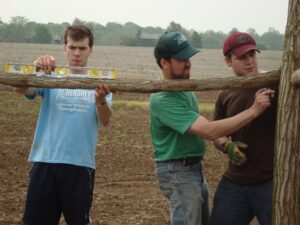
1832: The Medler Farm
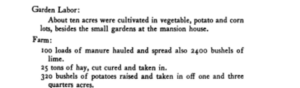
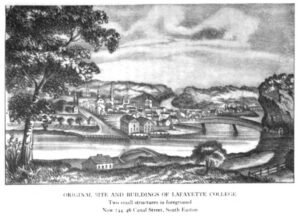
The College had a garden and farm that students could spend time working at to reduce their tuition or board fees. There was an “agricultural department” that employed 50-60 students in farming 3-4 hours a day. The college was situated on “The Medler Farm,” a 60-acre farm in South Easton.
Starting ~1835: Mulberry Trees
The college plants a row of mulberry trees (Morus Multicaulis) to provide food for silkworms following a cultural craze around the financial possibilities of silk culture.
1841: Class Tree
The incoming Class of 1845 planted a Class Tree in November. This is cited as the first attempt at landscaping on campus and the tradition of planting a class tree is continued for another 30 or so years ‘intermittently.’
1849: Herbarium
Professor of Chemistry, Botany and Geology Thomas Conrad Porter keeps an extensive herbarium in Pardee Hall. His research focuses on plants native to specific regions, compiled in posthumously published books including Flora of Pennsylvania (1903) and the Catalogue of the Bryophyta and Pteridophyta (1904). Unfortunately, most of his plant and mineral collection is lost in the first Pardee fire in 1879.
1853: "Illustrated Study" of the Sciences
The college prides itself on offering an “illustrated study” of the sciences. Natural Philosophy Professor James H. Coffin begins the practice in 1853 by taking students on a two-day field trip to the Delaware Water Gap – a trip that had to be taken on foot, with a wagon for supplies. Following this, hands-on study of nature is an expected part of many programs.
1868: Natural History Society
The student-led Natural History Society, under the guidance of botany Professor Thomas Porter and geology professor Charles Hitchcock, explored the regions within 20 miles of Easton to collect plants, insects, rocks and minerals for what would become the college’s cabinets and museums.
1885: Arbor Day
Arbor Day is first celebrated by the college “very solemnly, formally.” A sugar maple sapling is planted by the class of 1888 near the east end of Pardee Hall, and botany professor Thomas C. Porter gives a lecture on the importance of trees to society. Other groups, students, and faculty give performances or speeches. Students awaken the next day to the tree being painted green, with spruce twigs tied to the branches with green fabric. A new inscription reads “88’s evergreen.”
1886-1889: The Maple Tree
Freshmen plant a maple by Pardee in honor of Arbor Day. The event is marked by a speaker who talks on the value of trees in the local environment. Arbor Day then becomes an annual campus-wide tradition (save for a bit of drama the following year when the freshman class was so focused on hosting something ‘grand’ that they never got around to actually planting the tree) where classes are cancelled, events are held, and the freshman class plants a tree on campus.
In 1889, events continue but students are not given the holiday because “The faculty thought that the arbor days of last year would do for this year also.”
Celebrations continue. In 1894 students are given a half holiday, but after 1895 it is not mentioned in the student paper for 14 years.
Late 1800s: Arboretum
In the late 19th century, a section of campus – now the site of the Van Wickle Library – served as a nursery/arboretum where thousands of small trees, shrubs, and plants were nurtured for transplanting across the grounds.
1908-1909: Campus Landscaping
In an effort to add further landscaping to the campus, 240 trees are planted, including many rare varieties.
The college replaces coal furnaces, which at this point are still heating 13 buildings on campus, with a central steam-heating plant.
1942: Victory Gardens
The college turns to sustainability efforts in the wake of World War II. The community begins holding metal and paper salvage drives. The ironwork decorating Pardee Hall is removed for scrap. Victory gardens are planted along Sullivan Lane in an effort to grow food locally, and vacant land near the Mechanical Engineering building was divided among the faculty for gardening.
1944: College Values
The Post-War Program Committee releases a report that, among other things, defines what a liberal arts education means for Lafayette. Among these values is instilling in students “appreciation of Beauty for its own sake – in Arts, Literature, Music and Nature.”
1974: Campus Recycling
An official college-led recycling program returns. ¾ of a ton of paper is taken to a recycling facility in Easton on February 22. The group responsible for bringing the program back includes the college church, “some independents,” and students completing a term project for Environmental Geology. Each R.A. is tasked with assigning one person responsible for bringing papers from the floor to the dorms’ main entrance, where the paper is collected on Wednesday afternoons. The program is soon expanded to include containers in locations such as computer terminals, the post office, and secretary offices.
By May of that year, students are also being encouraged to save cans and glass for recycling, in coordination with the Chaplain’s office.
1982: Sustainable Architecture
Two Lafayette alumni worked to retrofit and innovate Lehigh Valley buildings in the pursuit of sustainability. From redesigning row homes in Allentown to utilize solar power to installing solar powered water heaters, Lafayette alumni have done it all to help the environment.
1984: Sustainable Transportation
Biking into a milestone reunion, a Lafayette alumni ditched his car for a more environmentally continuous practice of biking the 1,000 miles to Reunion (from Memphis, Tennessee to College Hill), raising awareness about sustainable modes of transportation.
1987: Bird Rehabilitation
Rescue and rehabilitation of birds has been at the core focus of the Lafayette Alumni with Bill Streeter ‘74 leading the charge from 1987-1998. His work aimed to rehabilitate local hawks and owls.
1989-1990: LEAP
Over 100 students and faculty attended the first open meeting with Lafayette Environmental Awareness and Protection (LEAP). This helped spur a campaign for individual action and advocacy for environmentally-friendly behaviors, like avoiding styrofoam and utilizing biodegradable laundry detergent.
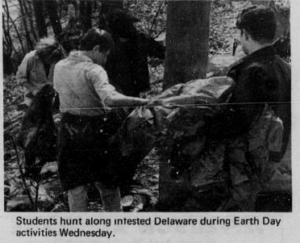
In 1990, LEAP organized an environmental week celebration of Earth Day, which continued to grow to our Earth Month celebrated today. This campaign revolved around bringing awareness to the environmental crisis and teaching others how to make effective change. This led students to join the LEAP and work on community initiatives within the Lehigh Valley.
2004: Green Move Out
The Green Move Out program is established, saving usable student items from the landfill during move-out at the end of the spring semester.
2007: Campus Composting
The food waste composting program begins, spearheaded by Mickey Adelman ‘10 and Prof Art Kney in engineering, and Earth Tubs are purchased using a grant from PADEP
2008: Climate Commitment
Orientation for incoming students is “Live Green, Lafayette,” according to an article in The Lafayette from that September.
President Dan Weiss signs the President’s Climate Commitment. The commitment is a country-wide effort to address global climate disruption by making institutional commitments to promote sustainable research, education, and engagement efforts.
Mellon Foundation grant is received for development of environmental degree programs, spearheaded by Prof Dru Germanoski
2009: LaFarm, the Bushkill Creek & a Green Roof
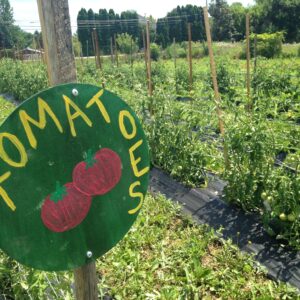
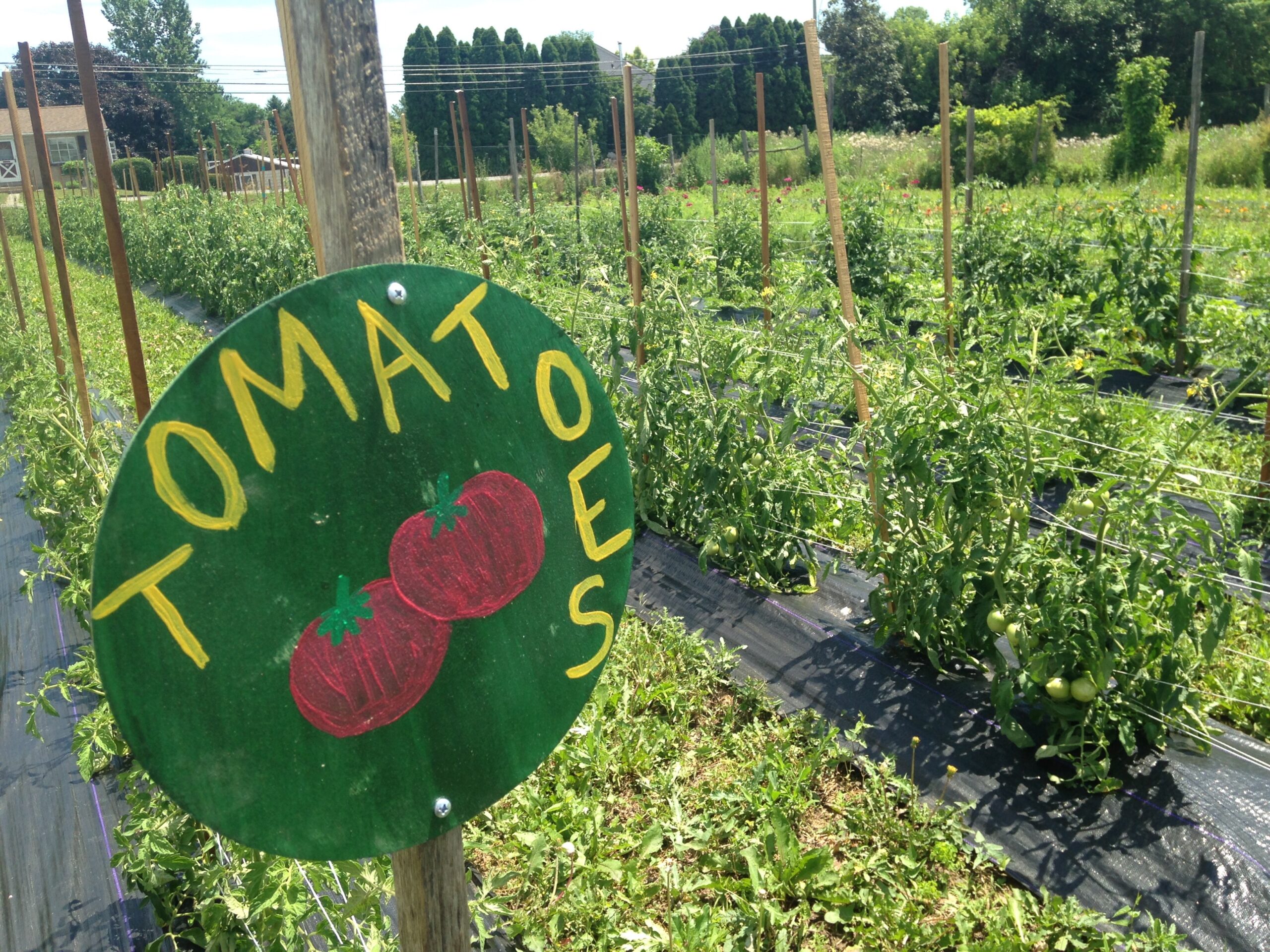
Using a grant from the Clinton Foundation, the organic garden that later became LaFarm is created by Jenn Bell ‘11 and Prof David Brandes in engineering
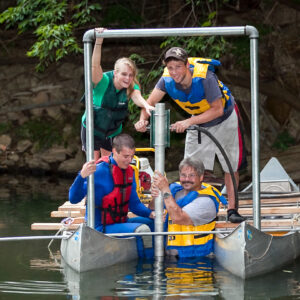
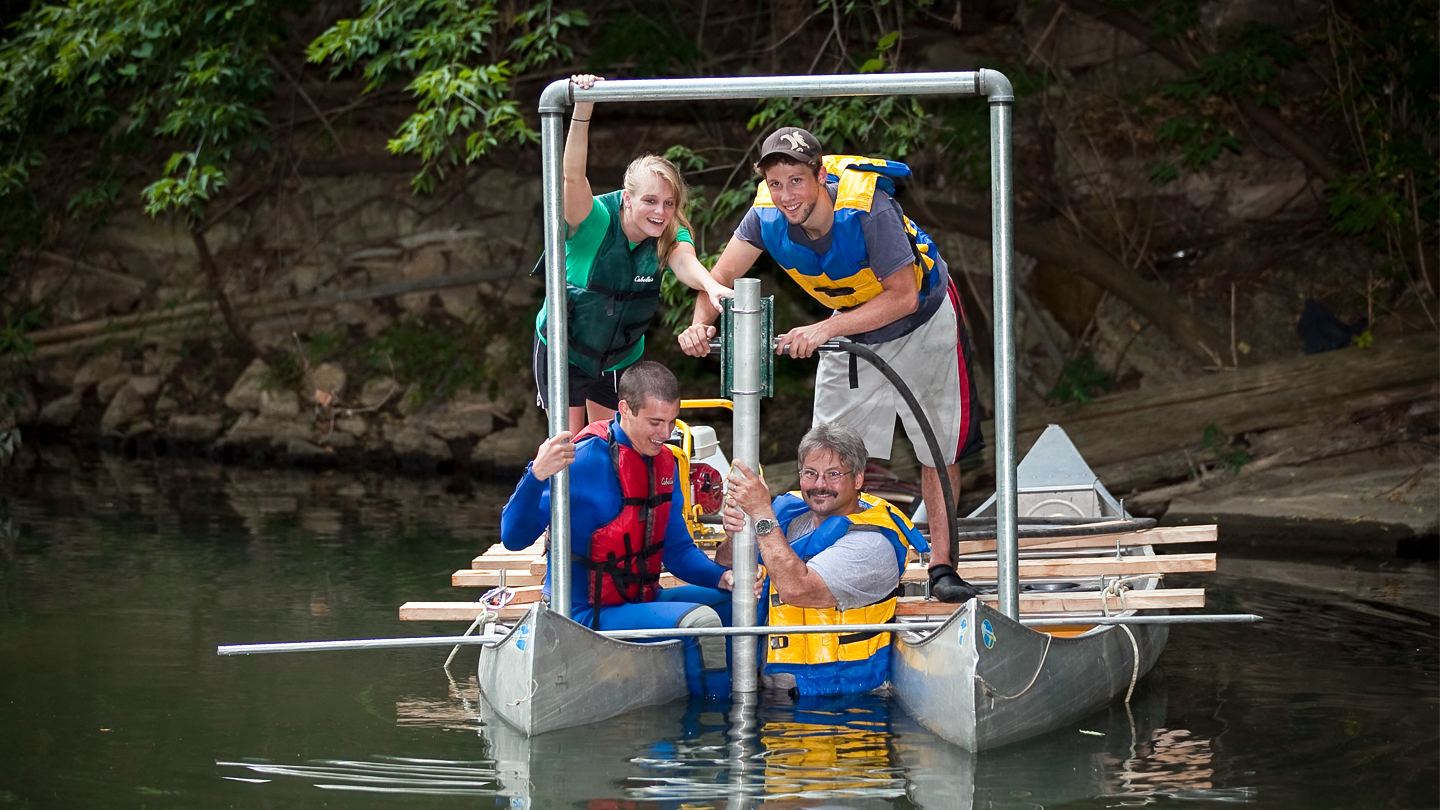
In 2005, Coal ash slurry spill from PPL Martin’s Creek in Northampton County, PA damages segments of Delaware River leads to Natural Resource Damage Assessment, leading to a Lafayette College interdisciplinary team of faculty and students begin pre-restoration monitoring in Bushkill Creek, a tributary of Delaware River that will likely receive funds for restoration from the settlement in 2009. This begins the start of a long term project to remove dams and restore biodiversity to the Bushkill Creek. In 2015 the Natural Resource Damage Settlement reached for $1.3 million dollars to fund dam removal and freshwater mussel reintroduction (i.e., keystone species) in the Bushkill Creek and between 2015-2021, the Wildlands Conservancy conducted restoration planning. Dams were removed in 2021, 2023 and 2024. About 3,000 freshwater mussels were reintroduced in 2024 and another 3,000 in 2025. There will be ongoing monitoring of the site.
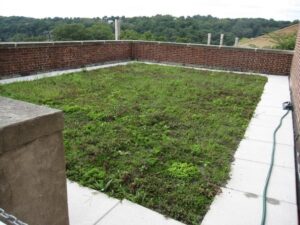
Lafayette College Society of Environmental Engineers & Scientists install a student-designed green roof system for Acopian Engineering Center. The system is designed to help with energy efficiency and creating a health ecosystem.
2011: Climate Action Plan 1.0
The College adopts its first Climate Action Plan, which led to the College setting a goal of a 60% reduction in emissions relative to 2007 levels by 2039.
2012: LaFarm Leadership
Our first full-time Farm Manager, Sarah Edmunds, is hired.
2013: Environmental Majors, LEED buildings, & food access
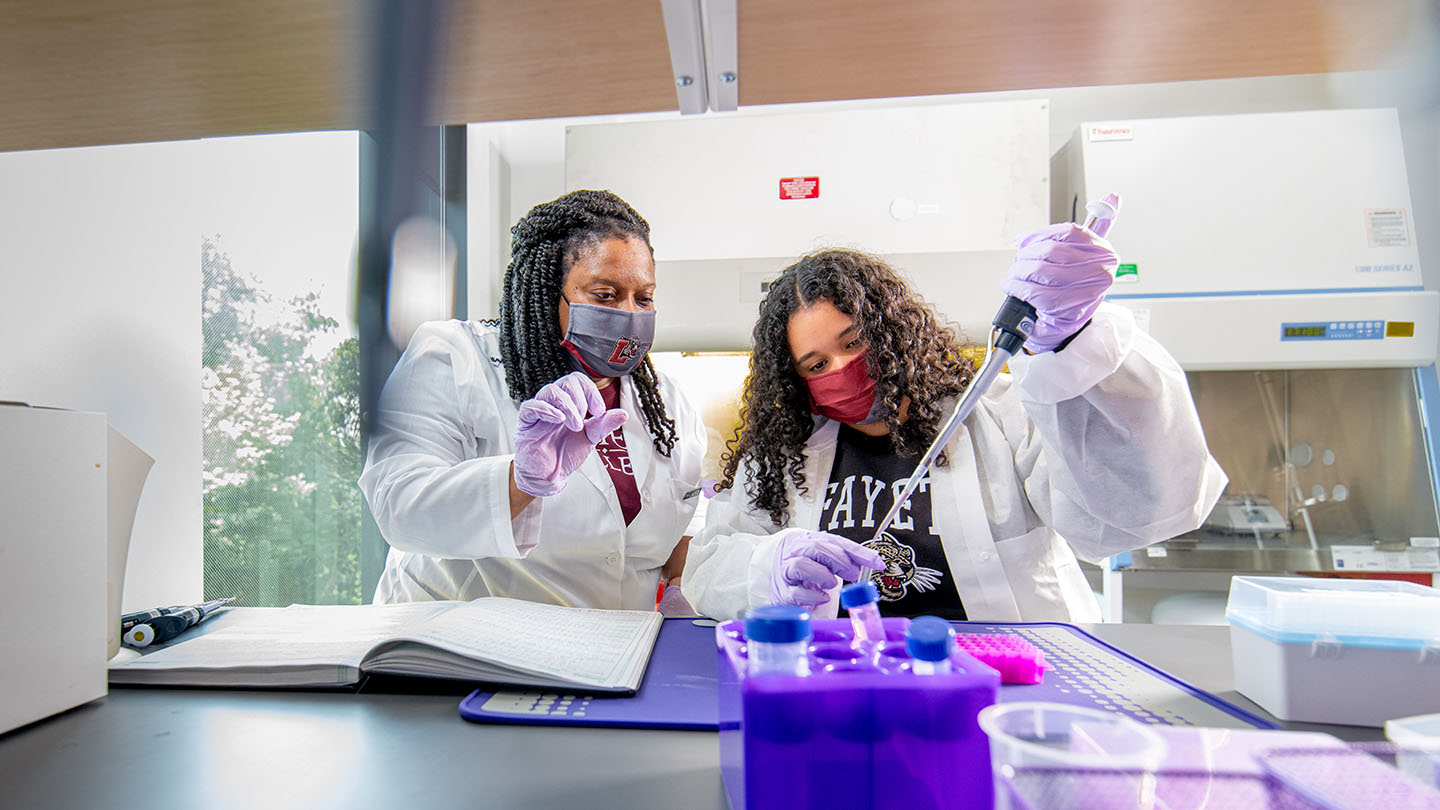
Environmental science and studies majors are established.
Grossman House for Global Perspectives becomes the first building on campus to receive a LEED certification after a renovation includes many energy and water saving features including heat-reflecting windows and a storm water retention tank.
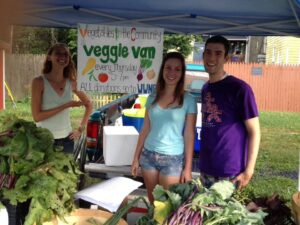
Lafayette students, in collaboration with LaFarm, West Ward Neighborhood Partnership, The Easton Urban Farm, the Southside Easton Area Neighborhood Center, and Crayola, begin the “Vegetables in Community” program. Students run a farm stand every Thursday in Easton’s West Ward, a historic food desert. The project was initially a Technology Clinic effort that morphed into the VIC weekly program. It was initially supervised by Professor Malinconico who was joined a couple years later by Professor Cohen. The program continued as a West Ward Farm Stand through the summer of until 2021. It continues still (2026) with students working at the Urban Farm in Easton and distributing produce at the West Ward Easton Area Community Center, the Harlan House in downtown Easton and the pantry at the Neighborhood Center. Photos courtesy of Vegetables in Community (2014)
2015: BirdSavers & LaFFCo
BirdSavers are installed against windows at Skillman Library, Acopian, Hugel, and Kirby Sports Center to prevent bird strikes. This effort was led by Professor Mike Butler of biology and Professor David Brandis of engineering, continuing on to include several other buildings and now be officially built into glass of new buildings on campus (Rockwell Integrated Sciences Center, Acopian Engineering 5th floor, Simon Center for Business and Economics).
Jen Ingrao ‘16 and Peter Todaro ‘16 founded the Lafayette Food and Farm Cooperative (LaFFCo), with Professor Ben Cohen of engineering as their advisor. The clubs aim was to educate about food and farm systems and support volunteering efforts at LaFarm. LaFFCo continues to this day (2016).
2016: Office of Sustainability
The Office of Sustainability is established. The office, originally located in Pardee and operating originally under director Marie Fechik-Kirk, serves as the new hub for sustainability programs on campus.
2018: Academic Focus
The faculty approves ‘Environment & Sustainability’ as an academic area of focus as part of the plan for growth.
2019: Climate Action Plan 2.0 & RISC
Climate Action Plan 2.0 is adopted. The goals outlined are much more aggressive, including aiming for full carbon neutrality and 60% of campus waste diverted from landfills by 2035. Lafayette is the first college in the Lehigh Valley to set a climate commitment.
Rockwell Integrated Sciences center is opened. The construction had received LEED Platinum certification, which is the highest recognition awarded by the U.S. Green Building Council for sustainable construction. It is the second building on campus to receive a LEED certification and the first new construction to receive one.
2021: Solar Array
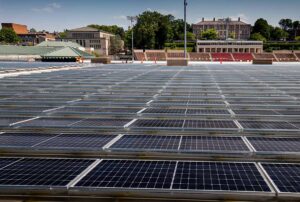
Solar panels are installed on the roof of Kirby Sports Center. The 2-acre solar array powers 27% of the building’s energy needs, generating about 540,000 kilowatt-hours of clean, renewable energy annually.
2022: West Ward Sale & Eco Reps
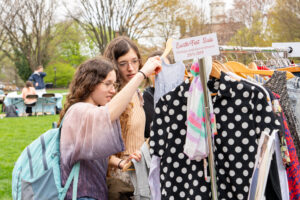
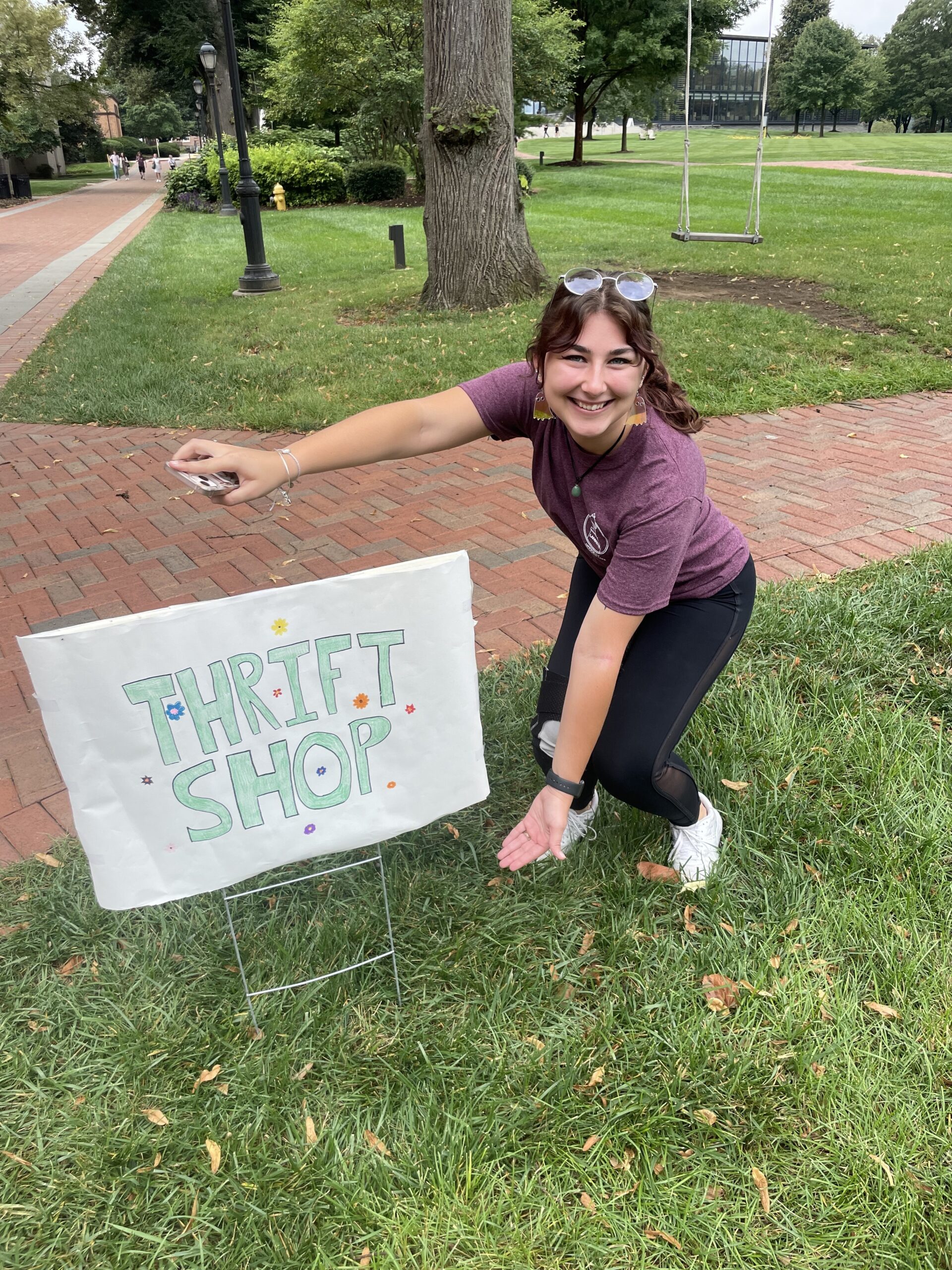
Lafayette holds its first West Ward Sale, providing donated student items from Green Move Out to the Easton community.
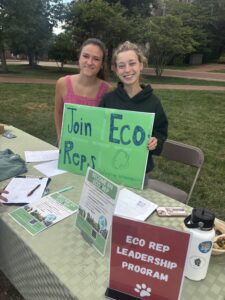
Eco Reps are established as peer-to-peer educators in Residence Halls.
2023: Greenhouse, Composting & Gold Rating
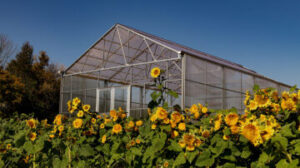
The 30 ft by 48 ft Matterhorn greenhouse is installed at LaFarm, providing a space for seed propagation for both LaFarm and community garden use.
Campus-wide composting returns to the dining halls with the purchase of a new composting vessel that can process food waste from both dining locations and major college events, which used to be sent off-site to a third party vendor.
Lafayette earns a STARS gold rating from the Association for the Advancement of Sustainability in Higher Education (AASHE) for its sustainability programs. Several new programs launched promoting sustainable living (Eco Reps Leadership Program, Sustainable Living Certificate, Leopard Leftovers, Sustainable Punchcard Program).
2024: Thrifting & Off-site Solar
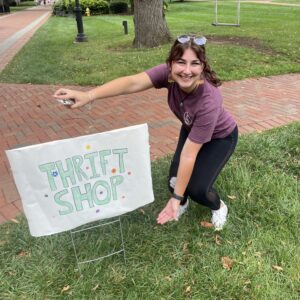
Pard to Pard, campus thrift store, gets a permanent home in Pardee’s basement, providing a space for students to buy donated items with a pay-what-you-can system year-round.
Lafayette joins a consortium with eight other colleges and universities to collaborate on a Power Purchase Agreement. The clean, renewable energy generated by the offsite solar project, while not being transmitted directly to campus, offsets 100% of the electricity used by campus.
2025: Farmer Conference
College hosts the Northeast Student Food & Farm Conference. Around 50 attendees meet to present on and learn about the topic of food justice.
2026: Climate Action Plan 3.0
Lafayette drafts Climate Action Plan 3.0 – an updated roadmap to carbon neutrality with an increased emphasis on resiliency and nature-based solutions.