This page was developed for Climate Action Plan 2.0, which was adopted in 2019. Lafayette’s new Climate Action Plan 3.0, adopted in 2026, builds on the progress of CAP 2.0 with updated strategies for achieving carbon neutrality by 2035 and strengthening climate resilience.
READ THE NEW CLIMATE ACTION PLAN 3.0
For further information on CAP 2.0, please refer to the information listed below.
A Call to Action
Continuing its ongoing commitment to academic excellence and environmental responsibility, Lafayette College has pledged to reach carbon neutrality by 2035.
The College’s Climate Action Plan 2.0 (CAP) provides the framework to achieve this goal. The projects and initiatives outlined in the CAP will bring students, faculty, and staff together to use the campus as a living laboratory to explore and test new models of sustainable systems. The CAP will enable the College to integrate sustainability into the curriculum, operations, and culture of Lafayette, giving students the knowledge, skills, and confidence to help solve environmental challenges of the future.
“Lafayette’s unique identity as a liberal arts college with a strong engineering program makes us well positioned to achieve this goal, says President Alison Byerly. “I am particularly excited about the teaching and learning opportunities the plan provides. It furthers the College’s mission as an institution that prepares our students to confront the challenges they will face as citizens.”
The Roadmap to Carbon Neutrality
- CAP 2.0 identifies a suite of strategies to reduce the campus’ carbon footprint, including:
- Energy:
• increase energy efficiency and conservation
• transform the campus energy infrastructure to reduce heating and electricity energy consumption
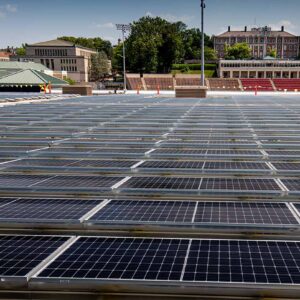
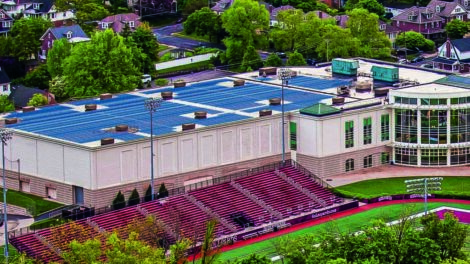
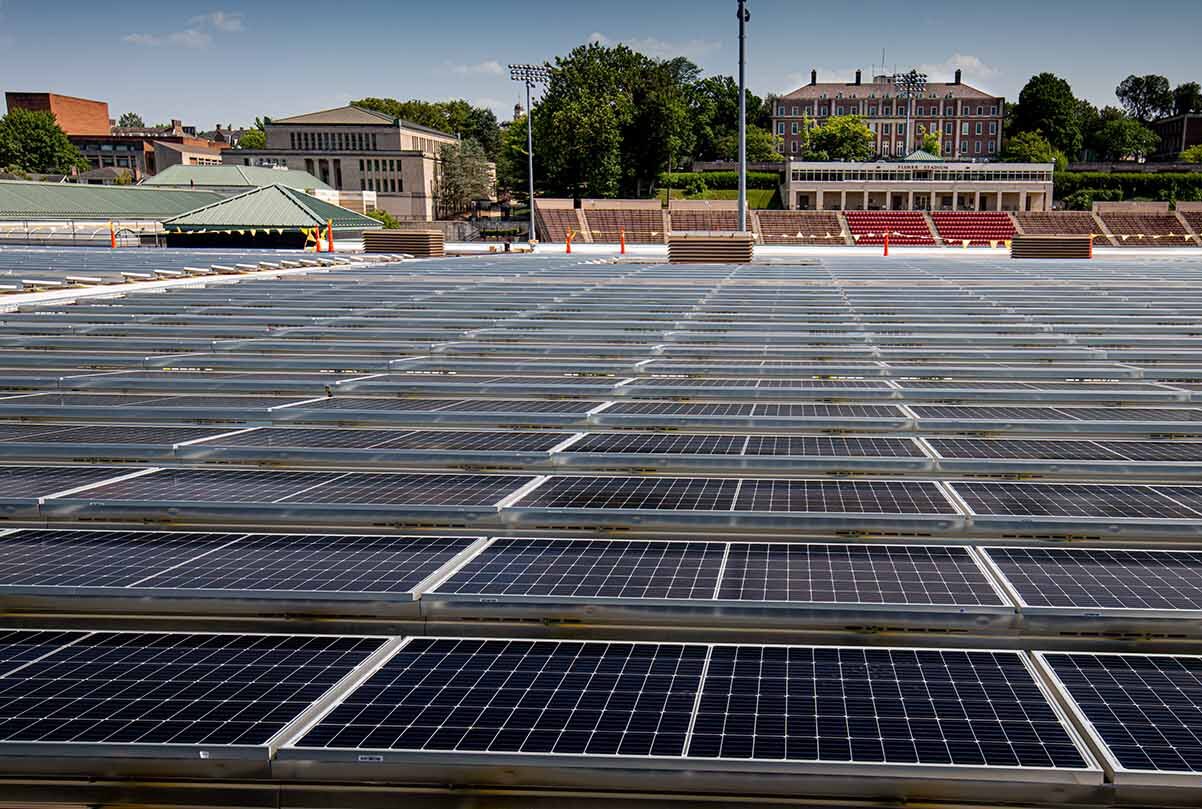
• invest in renewable energy options, such as solar
- Regenerative Ecosystems and Biodiversity:
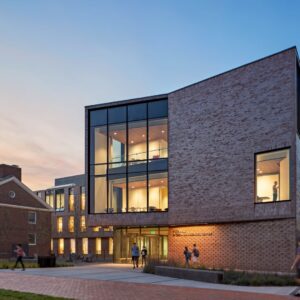
• pursue carbon sequestration strategies • expand native plantings and pollinator gardens • protect birds through anti-collision frit on glass windows
- Zero waste and circular economies:
• reduce waste at the source through the procurement process • expand composting • create pathways for redistribution of gently used goods